Wild Adventures Blog
Journey to the wild
Solstice Full Moon

This year marked a very special winter solstice (southern hemisphere). It was the first solstice since 1967 that coincided with a full moon.
I planned this event in order to witness the full moon rise over the Tygerberg Hill close to home. I saw that the moon was set to rise at 18:50. I gathered my camera and tripod and ventured out to the field where I planned to shoot from. However, I forgot that the predicted time was when the moon rises from the horizon and not over the hill. I didn’t want to leave so I waited until 19:30 before I saw any sign of the moon rising.
While waiting I even had a local police patrol van come to check why I was standing along an open field at night. I responded that I was taking photos of the moon, even though there was no moon in sight.
After waiting a few more minutes I saw a little bit of light reflect off a nearby cloud over the hill. Finally the moon was on its way.
Just before the moon came, I realised that my tripod was not holding my full camera set up. I decided to abandon the tripod set up and go with my bean bag as a stabilising option. To my dismay, I left the bean bag at home. There was no time left to go home and fetch it. Not wanting to miss the shot, I made a plan.
In the middle of the open, freezing cold field, I took off my hoodie to use it as a support structure. I was left standing, shivering in a flimsy T-shirt.
Finally, I saw the edge of the hill start to illuminate. I got ready to start taking the shots. It was incredible to see the full moon reveal itself over the brim of the hill. What astounded me more was how quickly it rises over the hill.
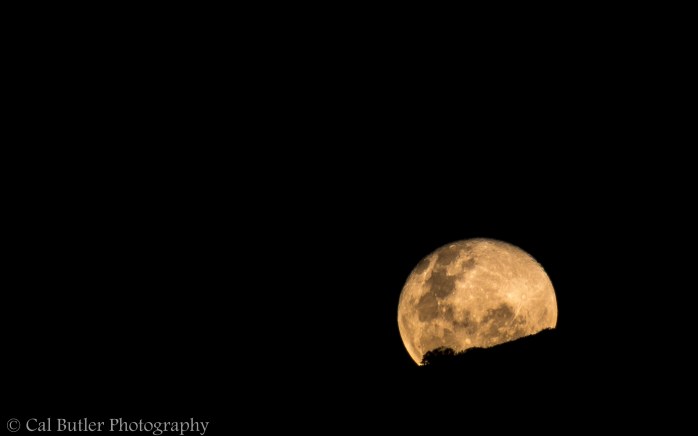
Within a very short time, the full moon had risen completely. I got a great shot of it while it was still within slightly polluted light.

It eventually broke through the pollution layer and showed its usual greyish tone that we are accustomed to.
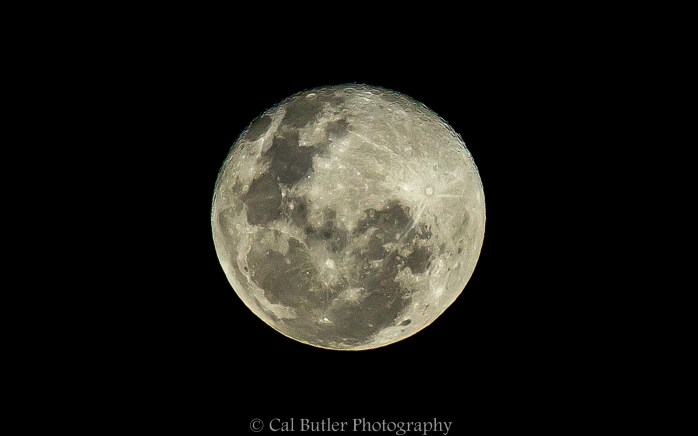
Despite the cold, I thoroughly enjoyed witnessing this once in a lifetime lunar occurrence. It will sadly only happen again around the year 2062.
Camouflaged Chameleon

It has been a long while since I have seen a Chameleon. So long ago, it might have been since childhood days.
It has been wet and cold in Cape Town recently and I have been longing to take my camera out. I found a gap over the long weekend and made my way to my local reserve, Intaka Island. To my dismay there was not much happening around the viewing hides.
One of my fellow photographers came up with a great idea. “Let’s go look for Chameleons.”
I had never even thought of looking for these tiny creatures around the reserve. I had seen mice, fresh water crabs, tortoises and other animals by chance, but not the camouflaged critters. I was really excited to see one again so off we went.
He showed me which bushes would most likely host chameleons. We ended up searching for quite a while, but the prospects of finding one looked rather slim. There was even a quick glimpse of the elusive Greysbok resident in the reserve.
We were about to throw in the towel when we decided to take a quick walk down an open deserted path. Walking along the pathway, I just happened to look up at a tall bush. Finally I had spotted one and a rather big one at that.
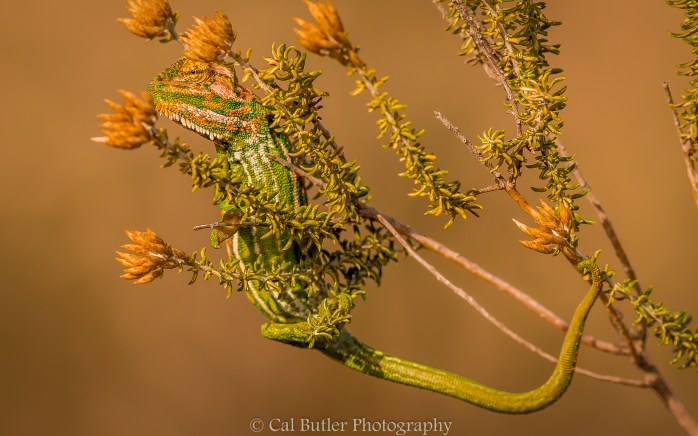
I had actually forgotten how beautiful these little reptiles are. The reserve holds one species called Cape Dwarf Chameleons. They are fascinating creatures and their robotic movements provide a great source of entertainment.
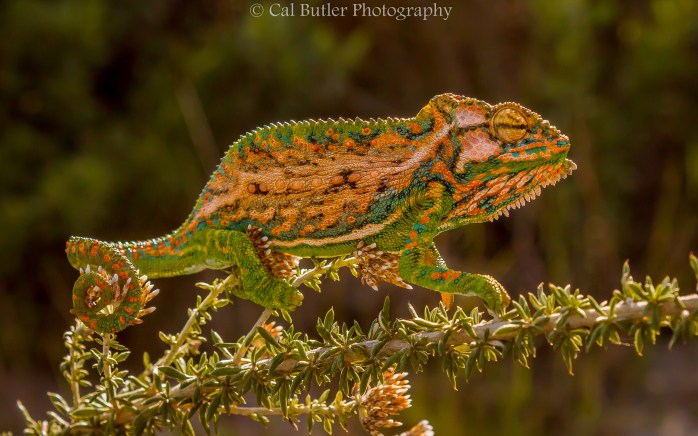

It was the first time in a long time that I actually switched between my long and short lenses. It was so much fun playing around and photographing this chameleon at different angles.
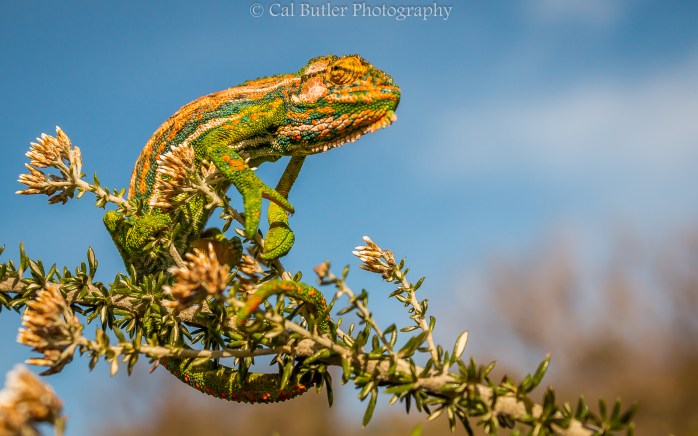

I’ll definitely be keeping my eye open for them again the next time I take a walk around the reserve.
The elusive day walker

Trying to spot elusive wildlife is often a frustrating undertaking. Even more so when you’ve already seen tell-tale signs that they’re in the vicinity.
On Sunday I made my way to Tygerberg Nature Reserve in Cape Town. My aim was to visit the nesting site of the resident Jackal Buzzards and see if I could get some nice photos again. It was already mid-day and luck was not on my side, or so it seemed.
I had positioned myself behind a bush for around 20 minutes. It did not seem as if the raptors were going to arrive anytime soon. I started scanning the veld for something interesting. Quite a distance away, on the opposite hill, was a gravel trail. For some reason my eyes kept scanning the pathway. Then all of a sudden it seemed as if the path started moving.
A moving gravel path? Surely not. Again I saw the slightest movement on the pathway. I was still looking at the land without binoculars or through my camera’s view finder. I had to investigate further.
I lifted my camera and scanned the area where I imagined the ground to be moving. Finally this all made sense. I managed to spot a figure moving rather confidently along the pathway. I wasn’t sure if my eyes were deceiving me. It wasn’t a dog, and far too small to be one of the buck in the reserve.
Was it what I had been hoping to see for so long? Could it be the owner of some paw prints I discovered a few weeks earlier?

I couldn’t believe my eyes. In the middle of the day, walking on an unobstructed walkway, was an adult Caracal (Rooikat). Not in my wildest dreams did I expect to actually see one in this reserve. Being so far away, it couldn’t see me watching it. The caracal proceeded to entertain me with a quick dust bath, a stretch on a nearby bush and even looked at some joggers who unknowingly jogged right past it.


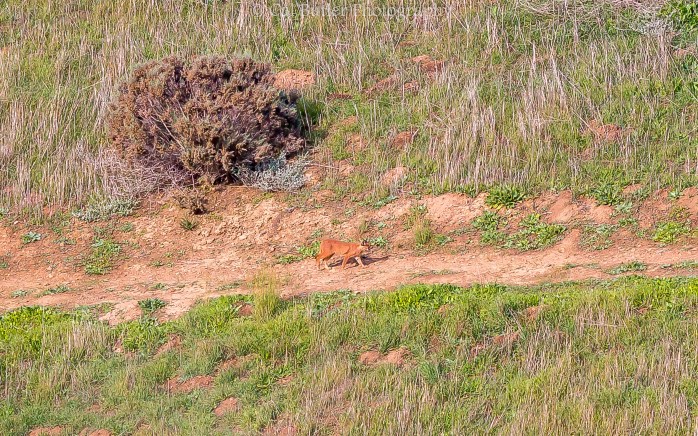
I was sure that it would bolt when the joggers came close, but it was completely relaxed. The feline slowly made its way up the hill and eventually disappeared into the bushes.

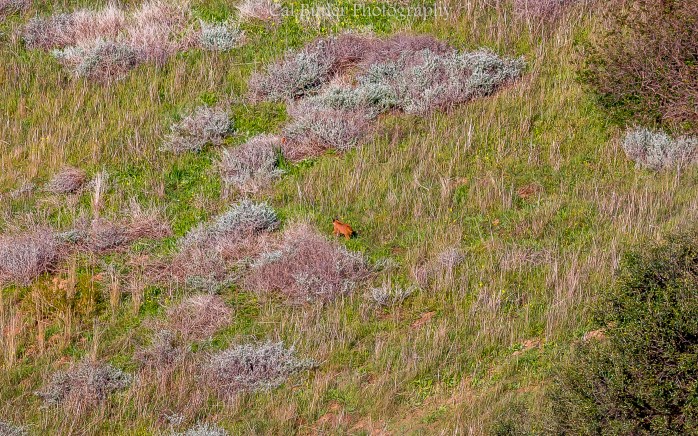

This is without a doubt the most special sighting I’ve had the privilege of witnessing.
Black Harrier Surprise

Visiting a nature reserve for the first time is always exciting for me. My first visit to West Coast National Park was exactly that and I was even rewarded with a very special sighting.
My first experience in the park was in the beginning of January 2016. I had done a little research on what type of wildlife to expect. It was still peak season and I knew the roads would be full of cars. I decided the best bet would be to spend some time in one of the viewing hides.
I made my first stop at the Abrahamskraal hide, fairly close to the entrance gate. This hide is situated on the only fresh water wetland in the park. I was really surprised at the diverse birdlife that this little water source boasts.
I had only started my photography hobby, so most of my time was spent fiddling with camera settings and figuring out what to do next. I looked up to scan the greater area for any wildlife and to my surprise I saw a raptor flying across the veld.
I could not identify the raptor at the time as I had not seen this kind before. Luckily there were some pictures inside the hide. The identification plaque said it was a critically endangered species. It turned out to be a Black Harrier.

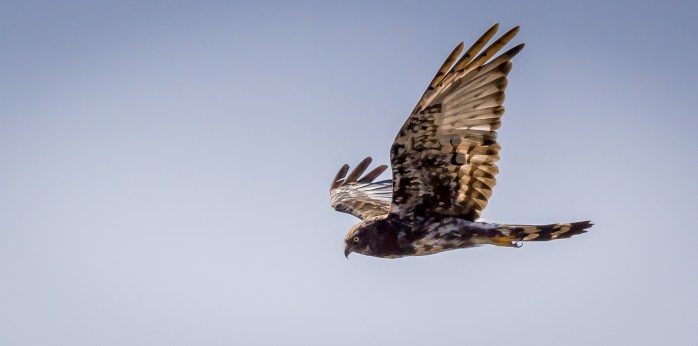
This Harrier flew in on a mission and looked like it was in charge! It was such a beautiful sight! One that I did not expect at all. It circled the wetland a few times and surveyed the veld, but did not manage to catch a meal.

Unfortunately the sun rises directly into the viewing hide so I struggled to capture the shots well. I hope to see this majestic raptor some time again.
Egret Dance Off
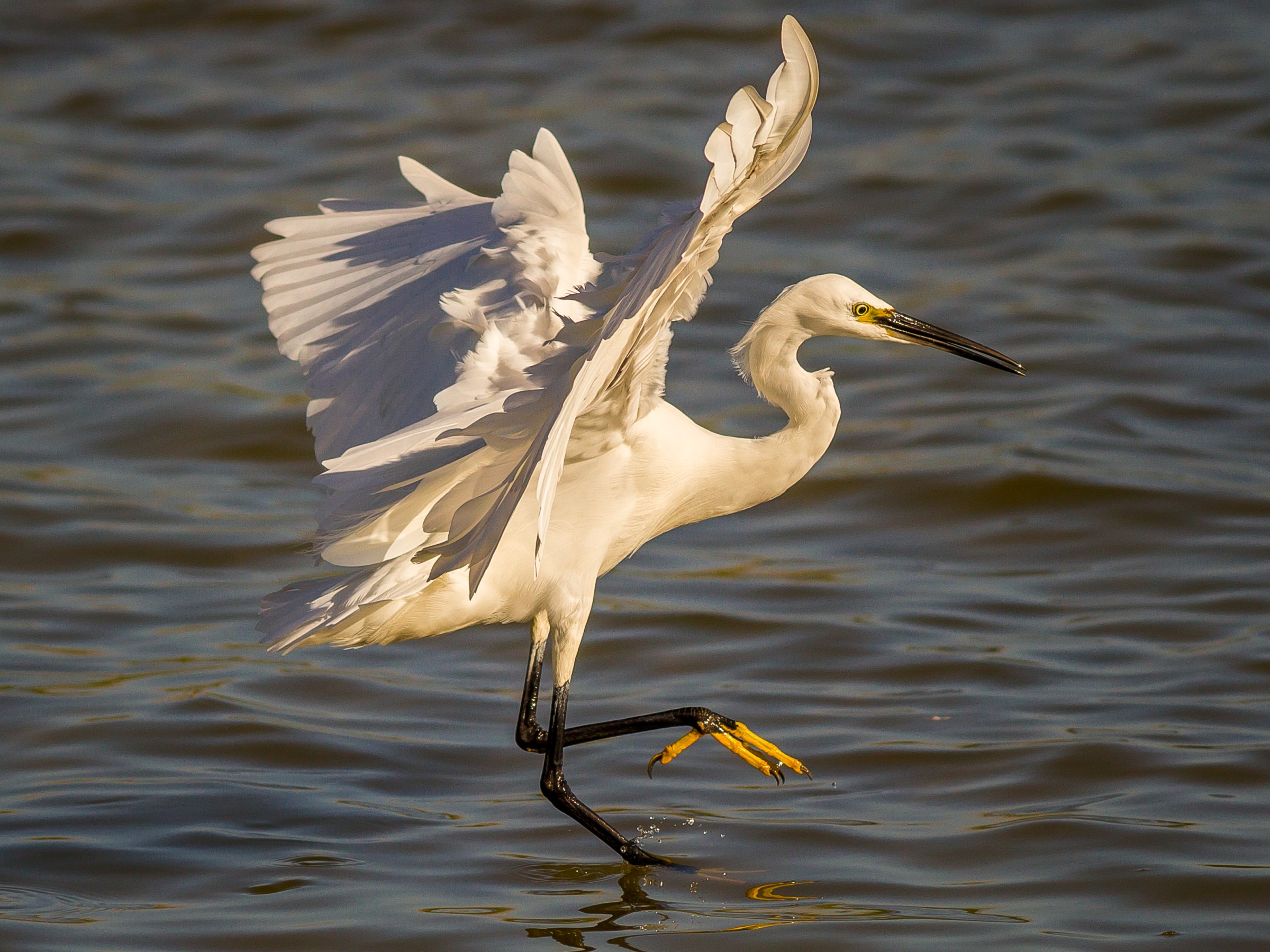
Having spent a lot of time hanging around wetland reserves, I’ve become accustomed to various hunting strategies from different birds. However, there was still one amusing strategy to be seen.
I made my way to my local Sunset Hide at Rietvlei Nature Reserve in Cape Town one early morning in May. In the shallow water stood a Little Egret. These birds are distinguishable by their bright yellow feet. I have seen them numerous times before, so I considered it to be just another Egret sighting.
With the very shallow waters in front of the hide, many shoals of Harders come to gather in the warmer water. I spotted a Purple Heron hidden in the reed beds along the water’s edge. The Heron’s will move close to within striking distance and then freeze like a statue until it is time to strike. Often the fish will swim close by and then quickly swim away resulting in unsuccessful hunts for the Herons.
The Little Egret however deploys a completely different strategy. After taking in the morning sun, it started to move around in the water. I saw some movement from the fish and all of a sudden the Little Egret started to prance around in the most bizarre manner. At first I had to try and figure out what it was doing. It was flapping its wings vigorously, running around in circles, hopping across the water in different directions.


This created a sense of confusion not only by me, but for the fish as well. In between all of this commotion, the Little Egret struck the water and managed to make a catch. This was most fascinating!


Just before I could see whether I managed to get any decent photos, this whole scene played out again.


And again.


And then again. It was unbelievable what a successful little hunter this bird was.
Once the Egret had its fill, I looked across the water to the reeds in the background. There the Purple Heron was still standing, in strike position, all but hoping for a single catch.
Bontebok National Park

Just outside the picturesque town of Swellendam, lies the Bontebok National Park. I made a visit to this Sanparks reserve for the first time in March and thoroughly enjoyed the days outing.
Not quite knowing what to expect from the park, I was pleasantly surprised by the friendly and efficient staff at the reception. The park offers a self-drive game viewing area. It is pretty simple to navigate as it is a large circular route that takes approximately 2 hours to drive. The direction is clockwise and ends at the day visitor’s picnic area. Unfortunately I managed to take a wrong turn at the start and ended up driving anticlockwise and felt horribly lost when none of the road directions matched that of the map. After an embarrassing phone call back to reception I managed to get back on track.

The picnic area is clean and tidy and the braai facilities are well looked after. It is situated perfectly along the Breede River. There was nobody else at the picnic area that day and we had the entire area to ourselves. In the distance I heard and saw two African Fish Eagles calling.
While sorting out the lunch, there was a knocking sound above us in the Oak Tree. Looking up I spotted a Cardinal Woodpecker. This was such a cool sighting as I had not seen a Woodpecker before.


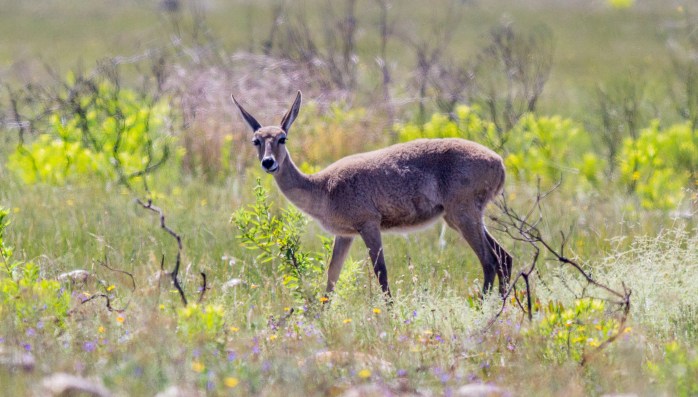
There is quite a couple of antelope to be seen in the park. I manage to spot Bontebok, Grey Rhebok and a Duiker. I was hoping to see the endangered Cape Mountain Zebra, but they must have been resting in the shade somewhere.


The birdlife is quite spectacular in the park. One of the great sightings to look out for is a Denham’s Bustard. I managed to get a glimpse of one far across a field. Luckily I took the binoculars that day. I was really hoping to see a Secretary Bird, but had no such luck. I even saw a couple of Blue Crane’s too.
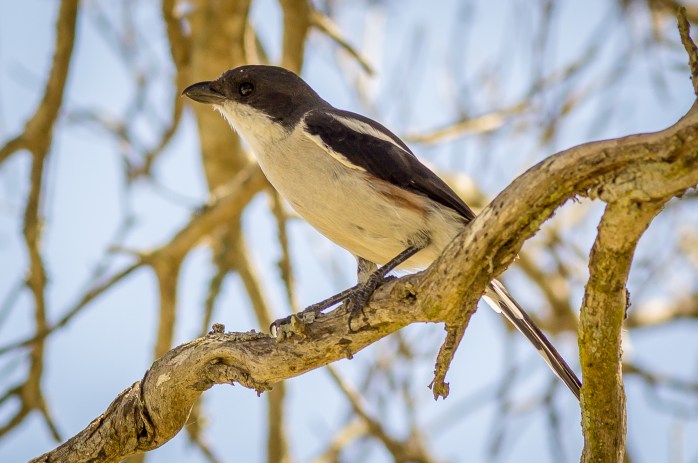
I managed to see quite a couple of raptors in the park. Some of the sighitngs included Southern Pale Chanting Goshawk, Jackal Buzzard, African Fish Eagle, African Marsh Harrier and Steppe Buzzard.



The park also offers a camping sight along the Breede River. I will most definitely make a point of camping there in the future.
My first Lion kill

Seeing the “King Of The Jungle” is such a thrilling feeling. On my first trip to Kruger I was lucky enough to see five different sightings of this magnificent beast.
After a very uneventful morning drive, my friend and I drove back to our camp at Skukuza along the H4-1. Not too long after leaving Lower Sabie, we saw a lot of cars parked along the river. We had finally seen what we were hoping for. Our first Lion kill!
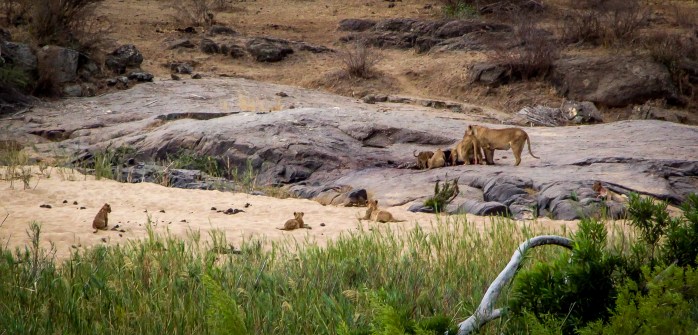
On the opposite side of the river bed we saw what all the commotion was about. There was a small pride of lions feeding on a zebra carcass. Unfortunately we did not witness the takedown, but we were treated to the feeding and interaction between the lions.
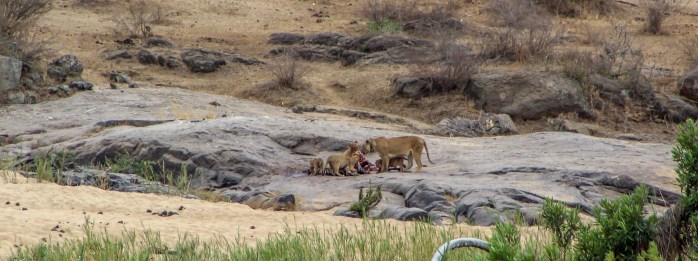
In total we counted 3 lionesses and 7 cubs. It was very entertaining to watch these lions. Some of the cubs were still very young and after feeding for a while they simply wanted to play. We parked at the sighting for close to 2 hours and simply enjoyed the various antics of the lions.
The kill still seemed quite fresh and there was still a lot of food available. We scanned the area hoping to see other scavengers that will try their luck at a quick meal. We could not see any action on the ground, but we did notice a good couple of vultures start to fly in.
Time was ticking and we started moving towards camp. Just as we thought the fun was all over my friend spotted a leopard further down the road, but I missed it. And as we thought the fun was over we arrived at another lion kill. Two lionesses had taken down a warthog. The lions were then chased away by some elephants nearby and ran off into the bush. About 40 minutes later one lioness emerged again and started feeding on the warthog. This was all behind thick bush so I could not take a decent photo.
Jackal Buzzard takes off
I made a quick visit to Tygerberg Nature Reserve on Freedom Day. There was another beautiful sunrise before the gates opened, but the weather started playing up and the clouds quickly rolled in.

There really wasn’t much action so I decided to cut the morning short. I made my way back to the entrance and renewed my annual membership. While I was talking to the ranger, I saw a Jackal Buzzard perched on one of the nearby pine trees. I decided to take a quick walk there and hopefully get some decent shots.
I approached rather cautiously as I wasn’t sure how skittish the bird was. I managed to conceal myself a little behind some wild olive bushes. I got as close as I could without potentially scaring the bird off. Despite trying to camouflage myself, I was spotted.
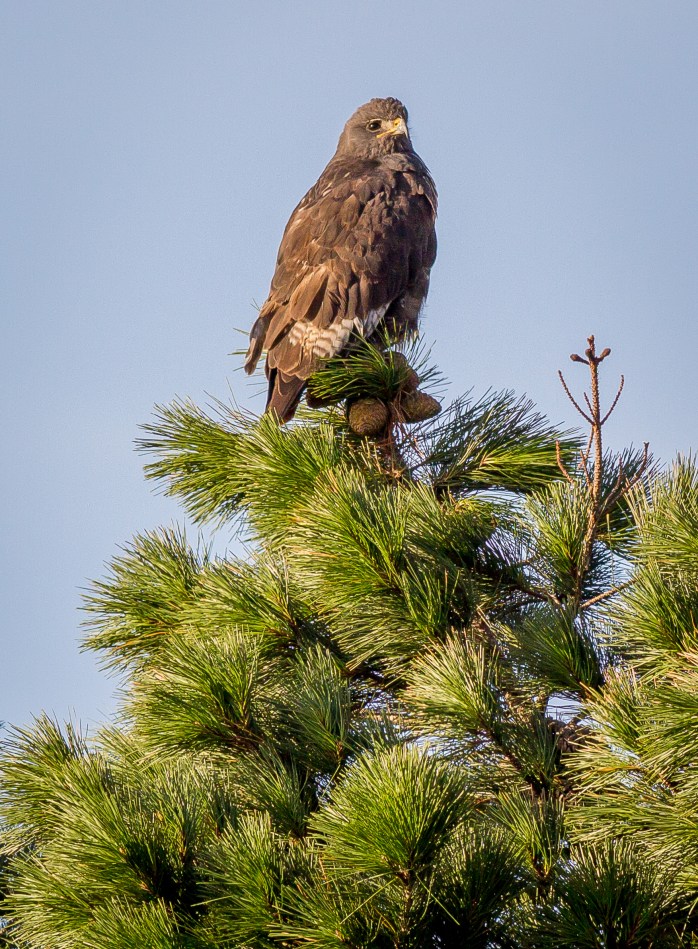
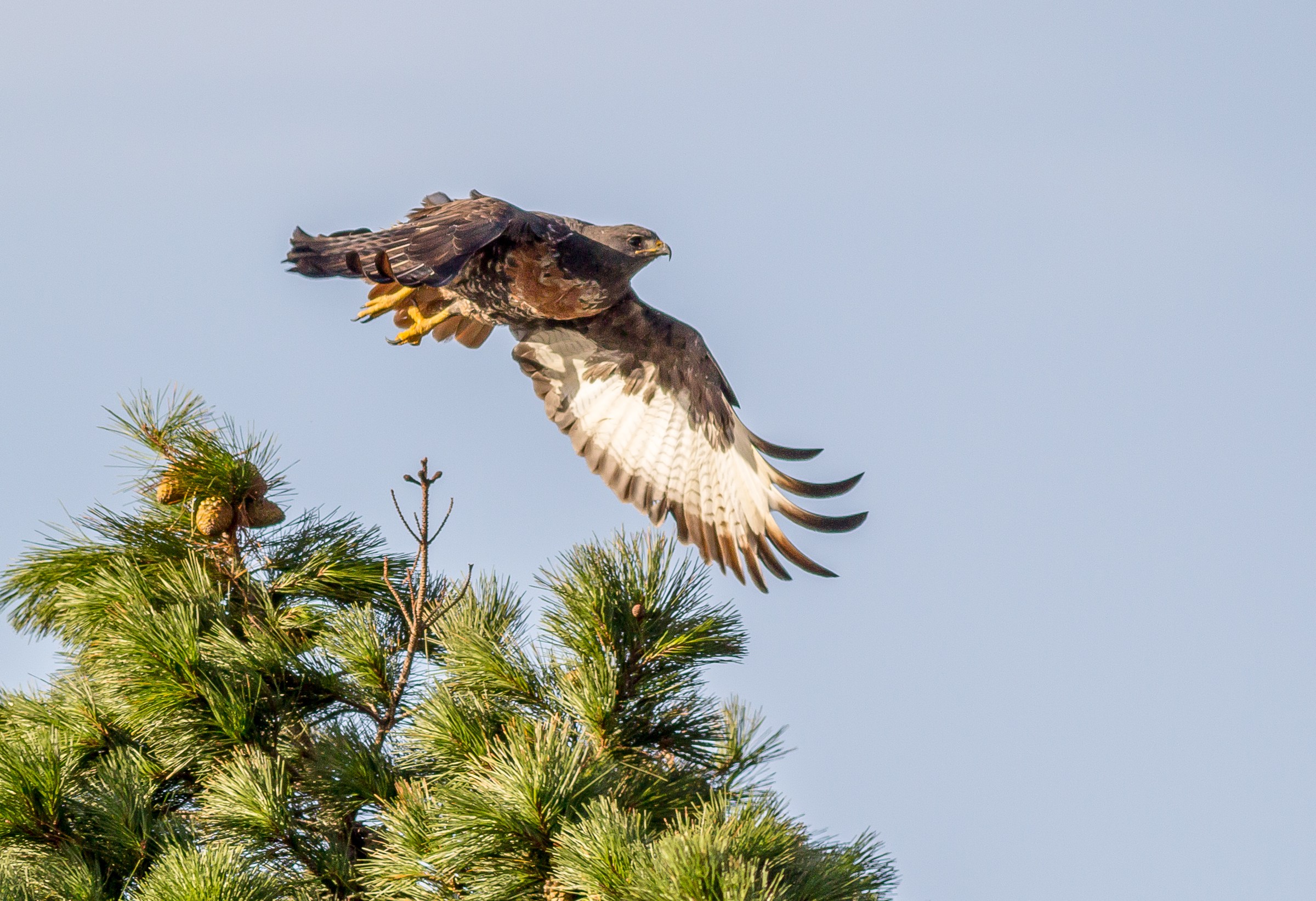
The Jackal Buzzard seemed unperturbed by my presence. It looked as if it was still going to sit there for a while so I decided to set up my camera and prepare for it to take off. I waited patiently for another 20 minutes. Finally I saw the Jackal Buzzard start to twitch and it look unsettled. I knew that it would take off any second.
I was right. I saw it thrust forward and spread open its wings and take flight. I simply love the colours of the Jackal Buzzard and I always marvel at the wingspan of raptors. It glided so gracefully and decided to bank sharply and fly off in the other direction.


That Golden Light

Cape Town saw one major storm pull through on Friday night. Yet by Saturday morning all bad weather had cleared up.
I woke up early the Saturday morning and headed out in the dark to get to West Coast National Park before the sun rose. It was still very cold and hardly any cars on the road. I followed the West Coast road that runs along a small mountain range. As I got closer and closer to the park I could see the sky starting to change colour around the mountain edges. It was phenomenal. Purple, blues, red, orange and yellow hues started showing.
An hour later and I had finally made it to the park. I was first to sign in at the gate. Straight ahead of the entrance was the full moon still high in the sky. By now the sky had lit up already, but the colours on the horizon still showed.
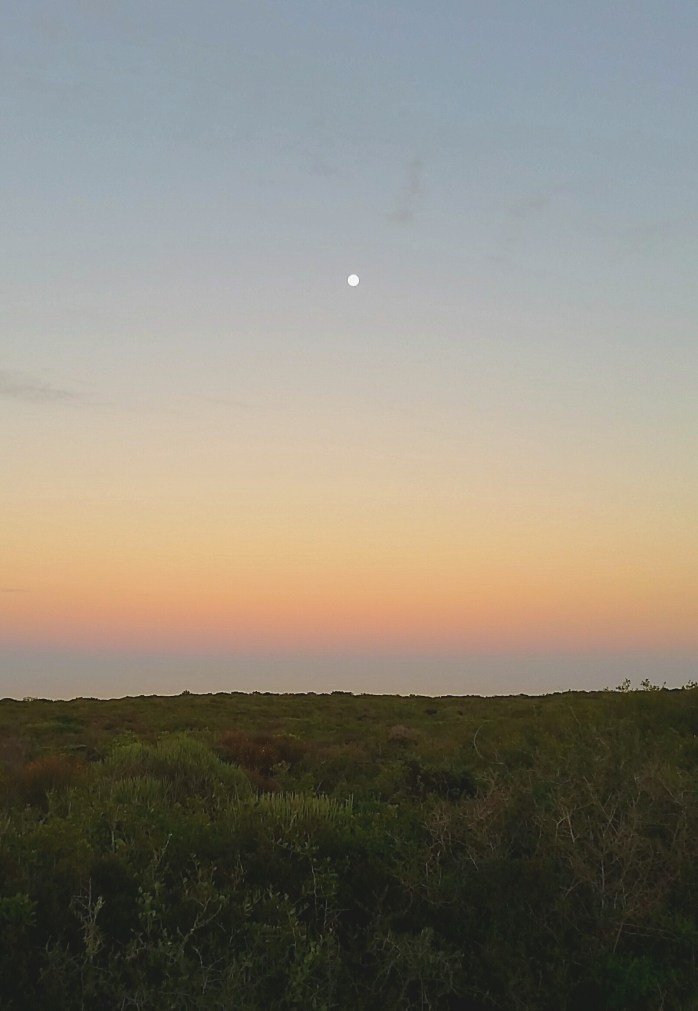
My aim for the day was to shoot in this mysterious “Golden Light” that all photographers talk about. My first subject in the park was a lone Ostrich, but the sun had not yet revealed itself so I got a pic or two and moved on.
I drove out to the Geelbek Bird Hide where I was hoping to shoot from and achieve my goal for the day. As I got out of my car, I saw some Eland. And as luck would have it, they were perfectly positioned for me to shoot them with the full sunrise behind them. I was blown away at the quality of the light and finally got that golden magic that so many are after.
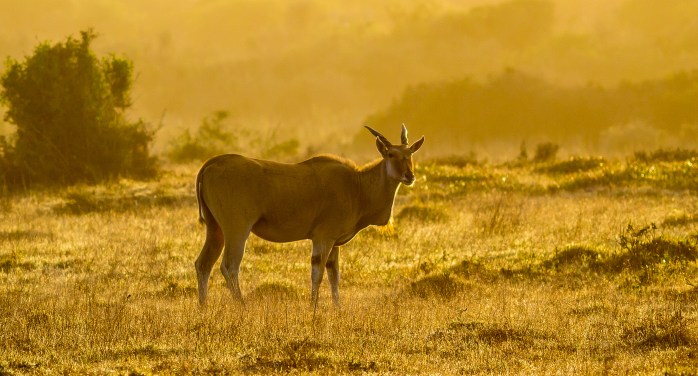

The Eland moved on and so did I. I took a quick walk to the hide so that I still had an opportunity to get some decent flamingo pictures.
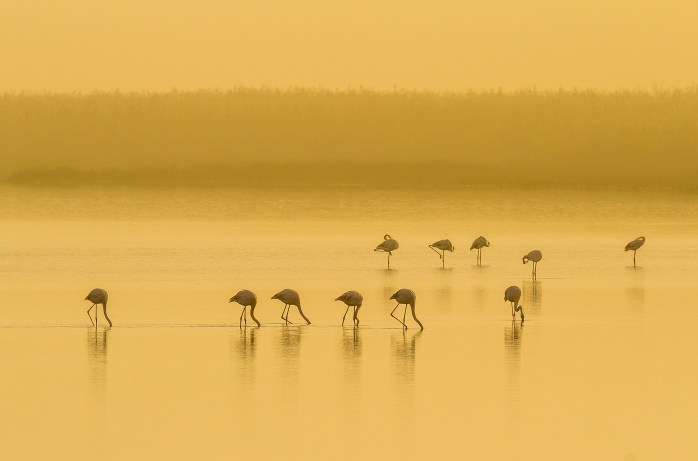
The light was only just shining at its best so that I could get a quick shot at some Greater Flamingos in the distance. The golden light faded very quickly and a slight mist rolled in.

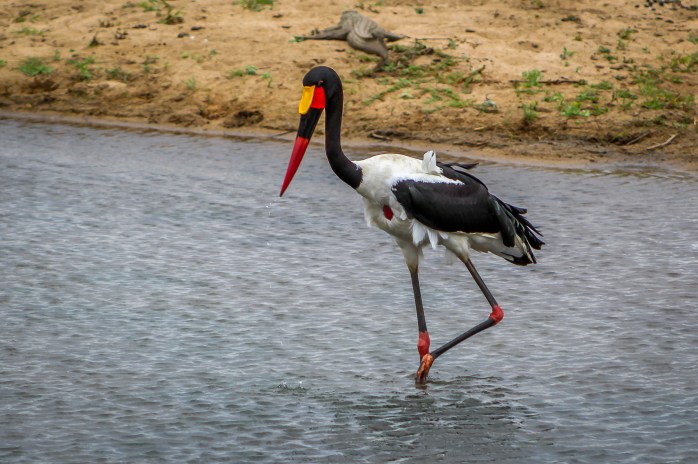
Saddle-Billed Stork trying to fish
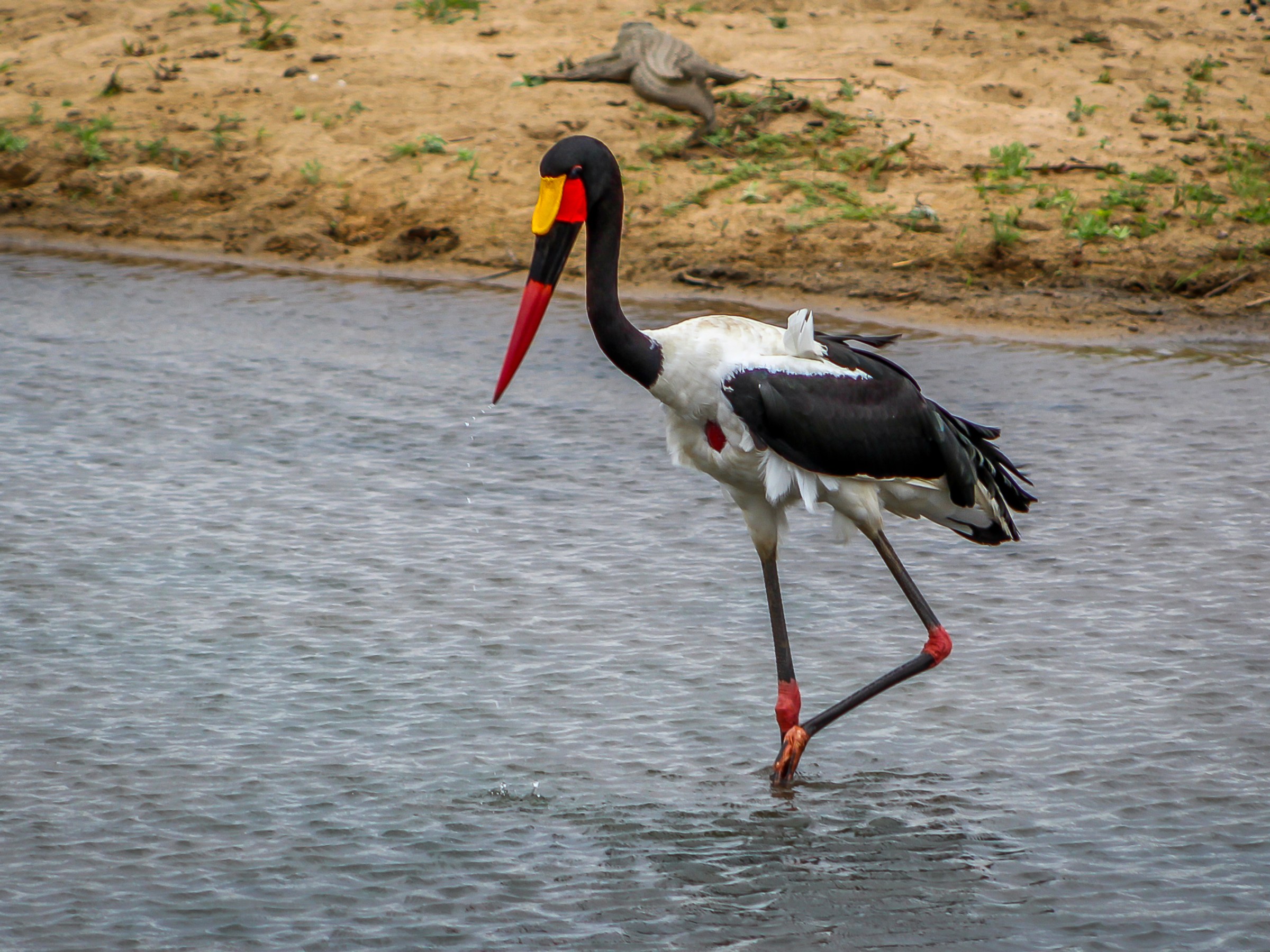
Crossing bridges in the Kruger usually provides some form of entertainment. The bridge at Lower Sabie did just that.
This was the first time that I had seen one of these critically endangered storks. They are probably the most elegant of all the storks in Kruger. I am glad that I managed to get various sightings of this elegant bird on each day of my trip.
The bridge at Lower Sabie is large enough to park the car on it without causing a traffic jam. This provides the opportunity to take a break from driving and enjoy some refreshments and snacks while viewing some game along the river. While doing so, a Saddle Billed Stork was busy fishing rather close to the bridge.
I managed to capture a failed fishing attempt. This didn’t seem to bother the bird too much. It simply continued with its activities.



 Wild Adventures Blog
Recent Comments